"DISEÑAMOS LUJO, CONSTRUIMOS TU HOGAR"

5 points to consider before designing your project
Before you ask an architect to design your project, you should consider the following points to make the process as smooth as possible.
Arq. César H. Germán Carrillo
9/23/2025
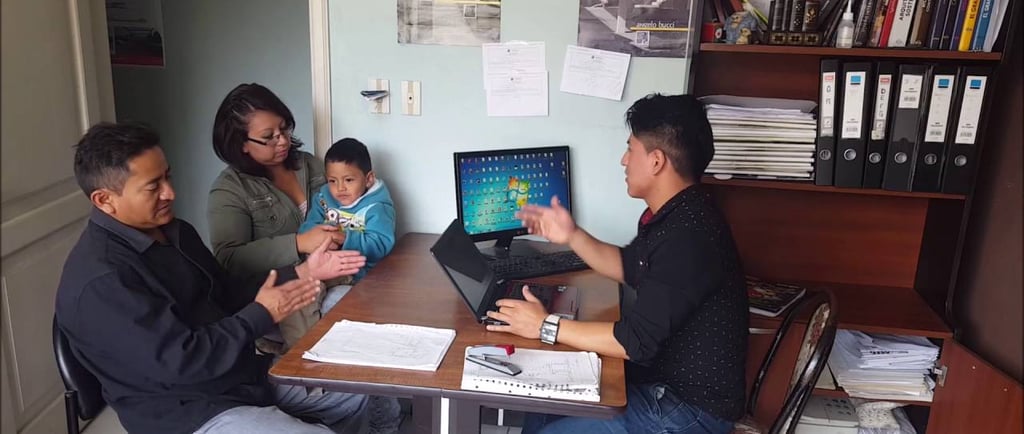

The interview with the client is the first and most important stage of any project. If done correctly, it ensures the entire process flows more efficiently and that the final result meets expectations.
The Initial Interview: The Starting Point of Your Project
The first conversation between the architect and the owner is much more than a simple meeting. It's the moment to lay the foundation for your future home or office. Through a series of questions, the architect seeks to understand not only what you want, but also how you live, what inspires you, and what your priorities are.
1. Pre-Interview Preparation: What You Should Have Ready Before the Meeting
Before you sit down to talk, it's helpful to have an idea of:
Your budget: You don't need an exact number, but a realistic range is crucial. This is essential for the architect to propose viable solutions and avoid future frustrations.
Your needs and wants: Make a list of the spaces you need (number of rooms, bathrooms, a study, etc.) and another list of the things you want (a kitchen island, a large garden, a balcony).
Your lifestyle: Are you a single person who hosts a lot of visitors? Do you have a family with small children? Do you work from home? These details directly influence the layout and design.
Reference images: Collect photos of projects you like. They can be from magazines, Instagram, or Pinterest. This will give the architect a visual clue about your aesthetic preferences.
2. During the Interview: Key Questions the Architect Will Ask
The architect will guide you with questions that aim to go beyond the obvious. Some of the most common include:
Regarding the use of the space:
What is the main purpose of the project? (A home, a commercial space, etc.)
Who will use the space and how will they interact with each other?
What are the most important activities that will take place in each area?
Regarding aesthetics and design:
What architectural style are you most drawn to? (Minimalist, industrial, rustic, etc.)
What materials do you prefer? (Wood, concrete, brick, etc.)
What kind of feelings do you want the space to evoke? (Spaciousness, warmth, modernity).
Regarding the lot or existing property:
Do you have a topographic survey or a plan?
Do you know if there are any local restrictions or regulations that should be considered?
Regarding the investment:
What is the estimated budget for the construction?
Which aspects of the project are most important to you? (For example, the layout, the quality of the finishes, or the delivery timeline?)
3. The Result of the Interview: The "Architectural Program"
Once the architect has gathered all the information, they synthesize it into a document called the "Architectural Program." This is the master document that defines the scope of the project. It specifies the spaces, their dimensions, the relationships between them, and the functional needs of each one.
1. Interview


The architectural program is a crucial point, often misunderstood by clients. It's the backbone of the project.
The Architectural Program: The Map of Your Project
The architectural program is a crucial document that the architect creates after the initial client interview. If the interview is the "brainstorming" session, the architectural program is the to-do list and the treasure map. It's a detailed summary of the needs, wants, and spatial requirements that the project must satisfy.
In simple terms, this document translates what the client wants into functional, measurable language. It goes from "I want a house with many spaces for socializing" to "I need a 30 m² living room with a direct connection to the kitchen and dining room."
Why is it so important?
Defines the project scope: The architectural program prevents misunderstandings. If something isn't in the program, it's not part of the initial scope. This protects both the client and the architect from constant changes and unexpected costs.
Serves as a design guide: For the architect, it's a roadmap. It tells them the required square footage, the relationships between spaces, and the functions the design must fulfill. It's the point of reference for evaluating whether the initial design proposals are on the right track.
Forms the basis of the budget: By defining the size and complexity of the spaces, the architectural program allows for a more accurate cost estimate from the start. Construction costs are directly related to the total square footage and the requirements of each area.
What Does an Architectural Program Include?
A good architectural program isn't just a list. It's structured and divided into several sections to be clear and comprehensive:
Project Identification: Name of the project, location, client, and type of construction (single-family home, office, etc.).
List of Spaces:
Mandatory spaces: Those that are essential. For example: kitchen, living room, dining room, bedrooms.
Desired spaces: Those that enhance the project but aren't strictly necessary if the budget is limited. For example: a laundry room, a game room, a study.
Exterior spaces: For example: garden, terrace, balcony, patio.
Requirements for Each Space: For each listed space, key characteristics are specified:
Estimated area: How many square meters are needed for it to function well? (e.g., Kitchen: 15-20 m²).
Furniture and equipment: What items should it contain? (e.g., In the kitchen: stove, refrigerator, dishwasher, breakfast bar).
Functional relationships: What other spaces should it be connected to? (e.g., The kitchen should be connected to the dining room and the service patio).
Special features: Any additional requirements, such as sun orientation, natural lighting, or privacy.
In summary, the architectural program is the tool that translates your dreams into concrete data so that the architect can begin to draw a project that truly fits your needs. It's a vital step that shouldn't be skipped if you want a successful outcome.
2. Defining the Architectural Program
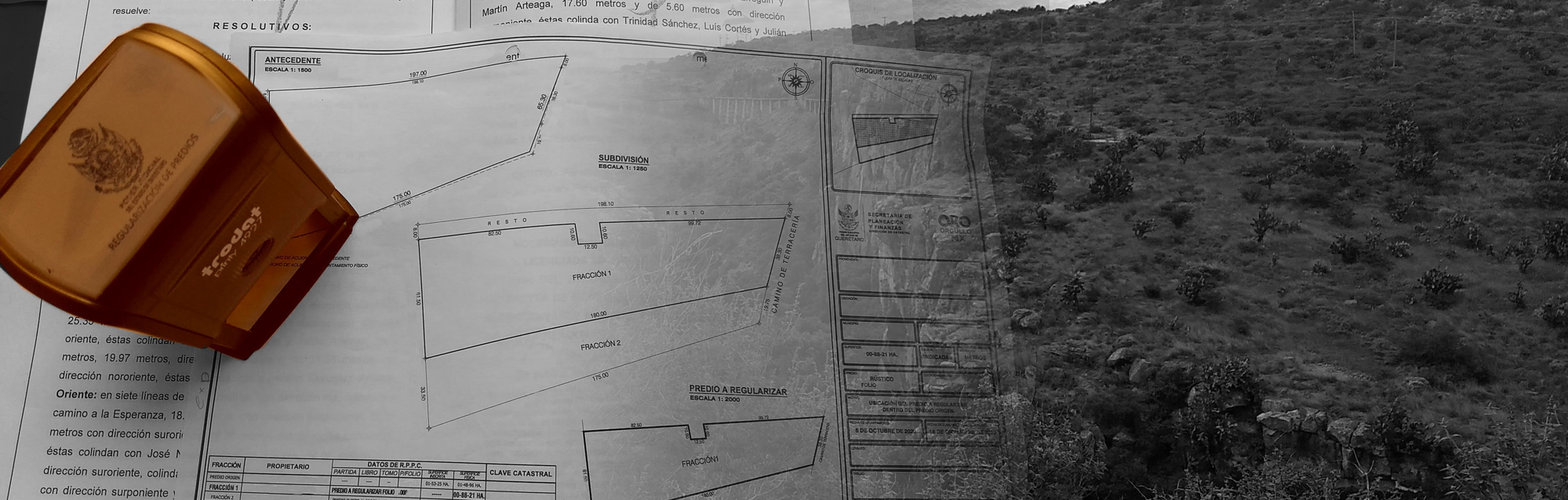
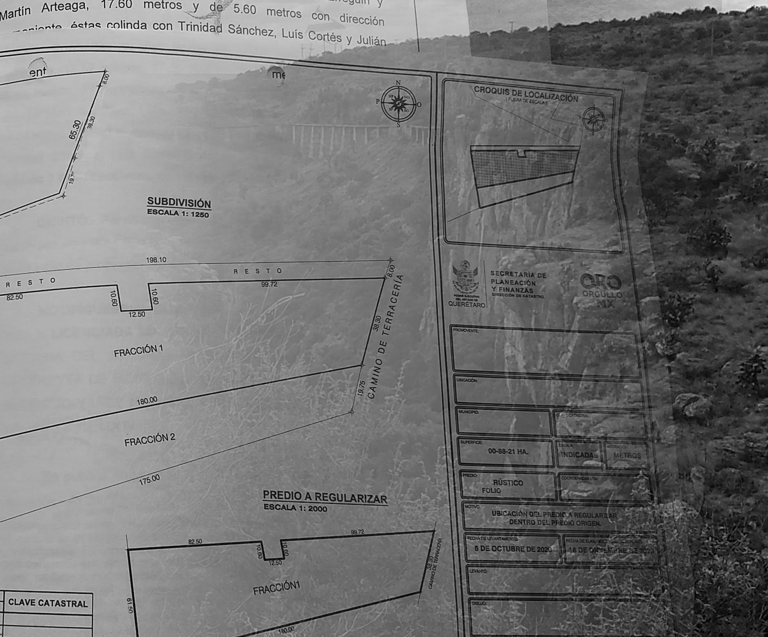
A project might be incredible on paper, but if the land has legal issues, all the effort and investment vanish. Addressing this topic gives your business a layer of seriousness and responsibility that potential clients will value.
Legal Information About Your Land: The First Step to Building on Solid Ground
Before you even think about the first line of the design, it's essential to understand the legal status of your land. It’s not just about being the owner, but about understanding what you can and can't do on that parcel. Ignoring this step can lead to fines, project shutdowns, or, in the worst-case scenario, the demolition of what's been built.
1. Verifying Property and Its Legal Status
This part ensures there are no surprises regarding who the owner is or whether there are any outstanding debts. It’s a "due diligence" process that any responsible architect or lawyer will recommend.
Deed of title (Escrituras): This is the fundamental document. It must be properly registered with the local Public Registry of Property. Through this registry, you can verify who the legitimate owner is, if the property is free of encumbrances (mortgages, liens), and if any easements exist.
Certificate of No Encumbrance: A document that confirms the land has no outstanding debts or is not subject to litigation that could prevent its sale or development.
Certificate of No Tax Debt: This confirms that the property tax (Impuesto Predial) has been paid and is up to date. Land with tax debts can create a legal problem that, in the end, the new owner would have to resolve.
Cadastral Survey Plan: This plan, provided by the Cadastral office, defines the exact boundaries and surface area of the land. It's crucial for ensuring that the measurements on paper match the reality on the site.
The legal information for your land is the foundation that holds the entire project together. It's a step that requires patience and diligence, but it will save you countless long-term problems, guaranteeing that your project is built safely and legally.
3. Legal information about the land
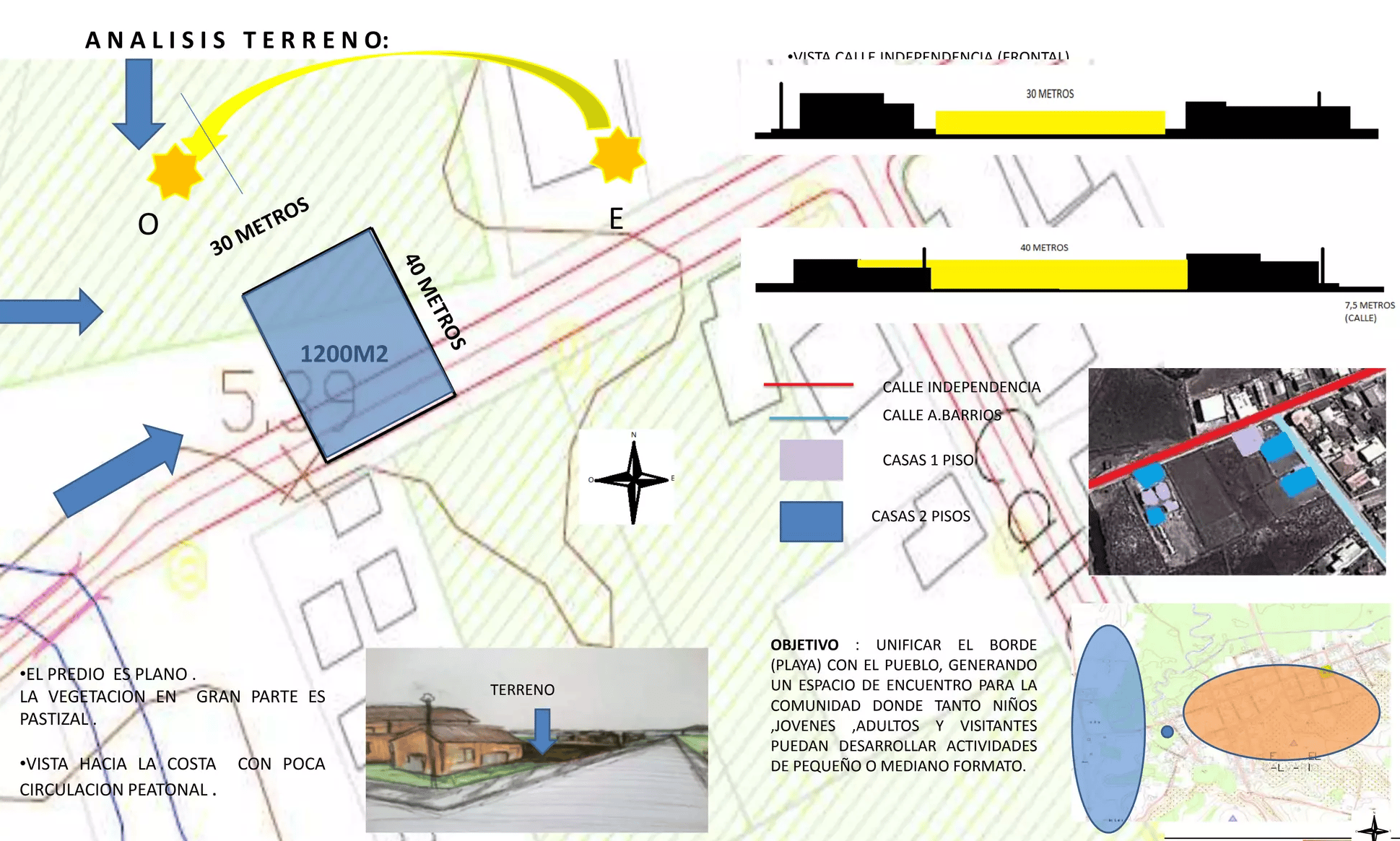
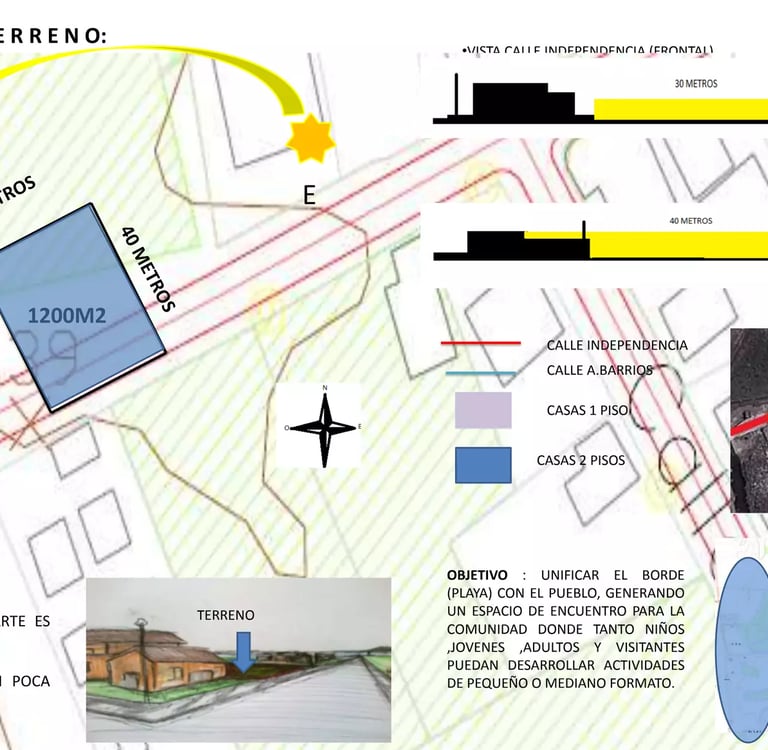
Site Visit and Analysis: The First Inspection of Your Project
Once the legal status of the land has been verified, the next essential step is to visit it. The visit is not just to confirm that the lot exists, but to understand its "personality." A good architect knows that a piece of land is much more than a rectangle on a map; it's a canvas with unique characteristics that will influence every design decision.
This analysis is divided into three parts: the surroundings, the site, and the topographic survey.
1. Analysis of the Surroundings
The project doesn't exist in a vacuum; it's part of an urban or natural context. Analyzing its surroundings is crucial for leveraging its advantages and mitigating its disadvantages.
Views and perspectives: Does it have attractive views of a mountain, the sea, or a park? The main spaces and windows can be oriented towards them. Conversely, if there is an undesirable view (like a wall or a factory), the design will need to block or conceal it.
Adjacent homes or buildings: It's vital to observe the heights, distances to property lines, and the location of neighbors' windows to ensure the privacy of the future project.
Traffic and noise: Evaluate the level of street noise, the direction of prevailing winds, and the climatic conditions of the area. This affects the orientation of the spaces, the location of windows, and the need for acoustic insulation.
Urban connections: How do you get to the land? Is it close to services like stores, schools, or public transportation? This can determine the location of the entrance or garage in the design.
2. Analysis of the Site
Once on the land itself, attention shifts to its internal characteristics. This is the phase where the architect becomes a detective.
Solar orientation: Understanding the sun's path is fundamental. Locating rooms to the south (in the northern hemisphere) takes advantage of natural light in the winter, while orienting large windows to the west can lead to overheating in the summer.
Vegetation and topography:
Existing trees: A large tree can be a treasure; it offers shade, privacy, and aesthetic value. Its location can define the layout of the house.
Soil type: Observe the type of soil, the presence of rocks, humidity, or the proximity to a body of water. This gives a preliminary idea of the potential complexities of the future project. This is not about conducting a full soil mechanics study, which will be left for a later stage when the executive project is underway.
3. Topographic Survey
Although this is often done by a specialist (a surveyor), the architect must understand the report and, if possible, be present during the measurement.
What is it? It is a technical plan that shows the exact relief of the land. It's not a simple map but one that has contour lines, which indicate differences in elevation.
Why is it important? It allows for the proper design of the foundation and planning for necessary earthworks (cuts and fills). On a flat plot, this is less complex, but on a sloped one, the topographic survey is the key to a functional and structurally safe design.
The analysis of the land transforms a lot into an opportunity. By understanding its challenges and virtues, the architect can create a design that not only adapts to the space but celebrates it, solving problems before they arise and maximizing the location's potential.
4. Site Visit and Analysis
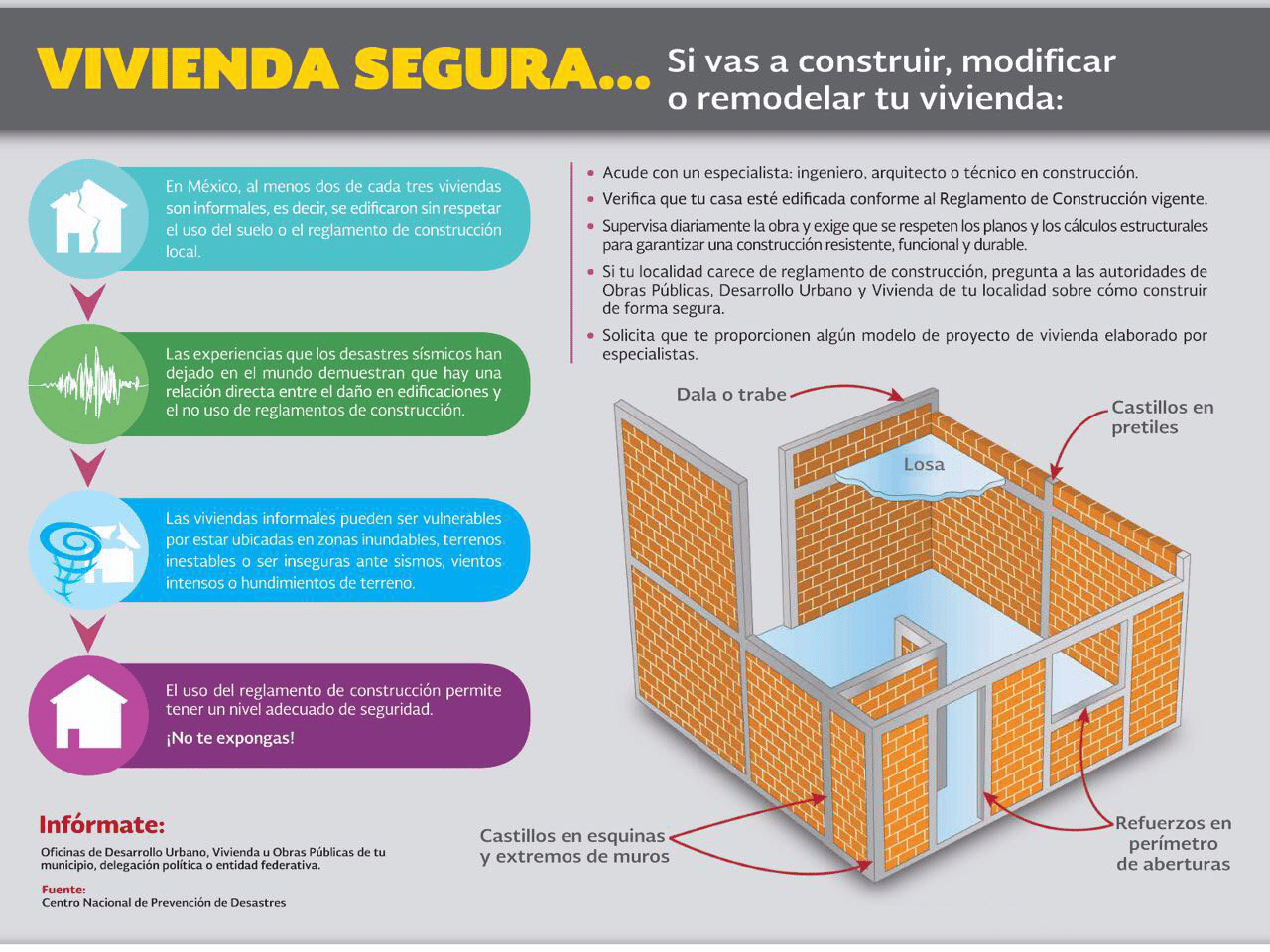
Review of Current Regulations: Knowing the Rules of the Game
Once the land has been analyzed, the next critical step is to understand the regulations that govern it. Urban planning regulations are not a suggestion but a set of rules that define what can be built and how. Ignoring them is the most direct path to facing fines, project delays, and even demolition of the work.
The study of regulations must consider two main levels: municipal regulations and specific regulations for the development or subdivision.
1. Municipal Regulations
These are the general construction and development laws that apply at the city or municipal level. They are found in the Urban Development Plan, local building codes, or zoning ordinances.
Land Use:
Definition: Land use is the most fundamental regulation. It determines whether the land is suitable for residential, commercial, industrial, or service use.
What to look for: You must obtain a land-use certificate from the municipal planning office. This document ensures that the function planned for the project is permitted in that zone.
Construction Coefficients:
COS (Coefficient of Land Occupancy): This indicates the maximum percentage of the lot that can be occupied by the ground floor construction. For example, a COS of 60% on a 200 m² lot means the building's footprint cannot exceed 120 m². This coefficient aims to leave open spaces for green and permeable areas.
CUS (Coefficient of Land Use): This establishes the maximum total square footage that can be built, summing all levels. For example, if the CUS is 1.2 on the same 200 m² lot, the total construction cannot exceed 240 m² (200 m² x 1.2). This limits the building density.
Height and Property Line Restrictions:
Maximum height: Most municipalities restrict the height of constructions, often specifying the number of stories or the height in meters. This is done to maintain the neighborhood's scale and prevent the obstruction of views or the creation of excessive shadows.
Mandatory setbacks: These are the minimum distances that the construction must maintain from streets, sidewalks, and neighboring properties. These setbacks ensure privacy, ventilation, access to natural light, and compliance with safety regulations.
2. Regulations for Residential Development or Subdivision
In addition to municipal rules, many plots of land, especially those within gated communities or residential subdivisions, have additional regulations that must be reviewed.
Internal Regulations:
What are they? These are a set of private rules created by the developer to maintain the aesthetic consistency and value of the subdivision.
What to look for? This regulation can be much stricter than municipal codes. In addition to including points like the "Construction Coefficient" and "Height and Property Line Restrictions" exclusive to the development in question, it may specify details such as:
Architectural style: Certain styles may be prohibited (for example, modernist facades) or the use of specific materials may be required (a certain type of tile, paint color, etc.).
Finishes and colors: Restrictions on facade materials, the type of fence, or the color of walls.
Parking areas: Specific requirements for the location and number of parking spots.
Work hours: Limits on construction hours to avoid disturbing neighbors.
Approval Process:
In many of these developments, the architectural project must be approved by an architectural committee or the subdivision's administration before a municipal construction permit can be requested. This additional step can add time to the process.
In summary, the review of regulations is a phase that cannot be skipped. Like the land analysis, it's a step that ensures your project is built legally, preventing problems and guaranteeing the smooth progress of the entire process.